
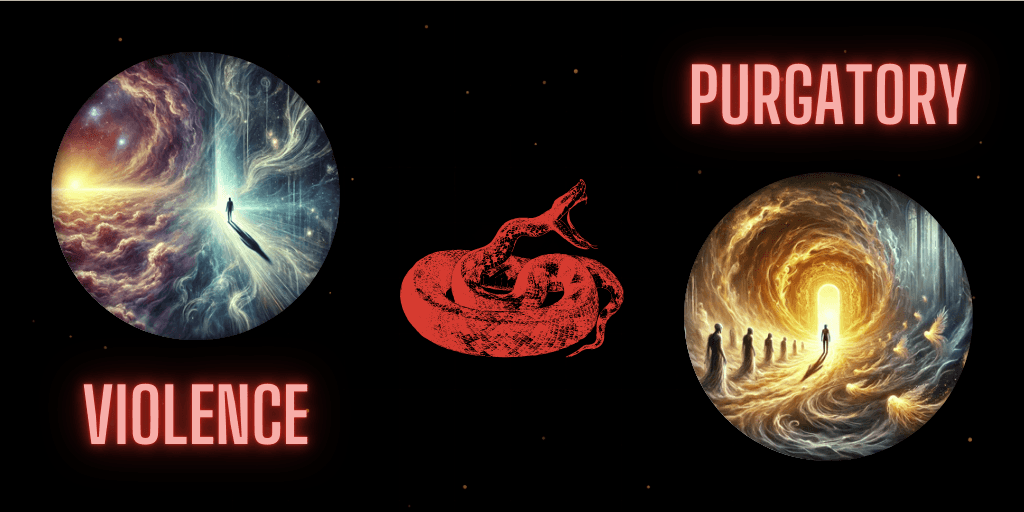
Snake: From Violence (Himsa) to Purgatory (Narka-Loka)
In Leela, the snake connecting Violence (Himsa, Square 52) to Purgatory (Narka-Loka, Square 35) symbolizes the profound spiritual descent that results from harmful, aggressive, or destructive behaviors, highlighting the necessity of facing consequences to achieve purification and transformation.
Understanding Violence (Himsa)
Violence, or Himsa, signifies actions and intentions that harm ourselves or others, consciously or unconsciously:
- Physical or Emotional Harm: Aggression, cruelty, and negative behaviors creating lasting suffering.
- Spiritual Consequences: Every harmful action carries karmic implications, resulting in spiritual stagnation and suffering.
- Energetic Disharmony: Violence disrupts emotional and spiritual balance, leading to internal and external turmoil.
Descending into Purgatory (Narka-Loka)
When violence becomes habitual, you descend into Purgatory—a state symbolizing purification through hardship and reflection:
- Transformative Suffering: Purgatory represents a state of purification, where suffering leads to self-awareness and deep transformation.
- Facing Consequences: It forces us to confront and process the emotional and spiritual damage caused by violence.
- Opportunity for Renewal: Although painful, purgatory provides an opportunity to cleanse past karma and reset our spiritual trajectory.
The Link Between Violence and Spiritual Cleansing
This snake emphasizes that violent or harmful actions always have consequences, but also provide powerful lessons:
- Awareness Through Suffering: Recognizing the suffering caused by violence is the first step toward true inner transformation.
- Healing through Accountability: Facing consequences in purgatory helps dissolve negative patterns and invites healing and renewal.
- Spiritual Evolution: Experiencing the karmic impact of violence encourages the cultivation of compassion, empathy, and non-violence (Ahimsa).
Practices to Move Beyond Violence to Healing
To actively transform this cycle:
- Practice Ahimsa: Commit consciously to non-violent actions, thoughts, and words in your daily life.
- Emotional Processing: Engage in emotional release practices, therapy, or mindfulness to address and heal the underlying causes of violent impulses.
- Compassion Meditation: Regularly practice compassion-focused meditation to foster deep empathy, kindness, and non-harm.
Reflective Questions for Personal Insight
- Where might violence or aggressive impulses appear in your own thoughts or behaviors?
- How can you actively cultivate compassion to replace negative or violent tendencies?
- What practical actions can you take today to foster a peaceful, empathetic, and spiritually-aligned life?
A Call to Nonviolence and Spiritual Renewal
Acknowledge violence as a critical spiritual teacher. Commit to consciously practicing non-violence, compassion, and self-reflection, using past mistakes as catalysts for profound growth and spiritual renewal.
Are you ready to transform past violence into healing and spiritual clarity? Start your journey of compassion today and move confidently towards lasting inner peace.
Series Navigation
Previous in the Series: Arrow: Conscience to Happiness - Explore how following your conscience leads directly to true happiness.
Next in the Series: Arrow: Spiritual Devotion to Cosmic Consciousness - Discover how devotion elevates consciousness to cosmic awareness.