
This story is part of our journey through emotional healing and self-discovery with Leela. To understand the context and explore other stories, read our series introduction.
War Childhood: Transforming Trauma into Strength
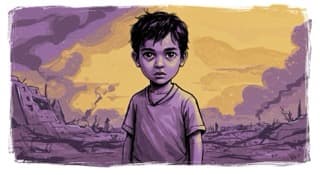
Born into a war-torn Sarajevo, Bosnia, Ana’s earliest memories were marked by uncertainty, fear, and the chaos of conflict. Her childhood unfolded amid air-raid sirens, crowded basement shelters, and nights spent counting the seconds between blasts. Although she eventually relocated to Canada, the aftermath lingered into adulthood, surfacing as anxiety, hypervigilance, and scars that no move across an ocean could erase.
Despite building a stable career as a teacher in Toronto, Ana’s inner life stayed shadowed by her early years. Intimacy felt risky, trust was slow to build, and she found herself bracing for danger even in ordinary moments — a slammed locker, a raised voice, a car backfiring on the street. Beneath her composed exterior lay unhealed wounds, isolation, and a lasting sense of vulnerability.
Ana’s Emotional Loop: Trauma and Hypervigilance
Ana came to recognize the patterns her wartime childhood had wired into her:
- Chronic anxiety and hypervigilance: Constantly scanning for threats, so that even calm days left her exhausted.
- Difficulty trusting others: Holding people at arm’s length and struggling to build genuine connections.
- Emotional numbing: Shutting down her feelings and keeping distance as a shield against perceived threats.
Together these patterns fed a cycle of isolation, anxiety, and a restless search for safety.
Recognizing the Patterns
Putting words to what she felt became the first real step toward Ana’s healing:
- Persistent anxiety: A constant, low fear of instability or loss, rooted in her earliest experiences.
- Deep-rooted mistrust: An instinctive caution in relationships that left her feeling alone even among friends and family.
- Avoidance and suppression: A habit of burying painful memories that only deepened her distress.
Seeing these patterns clearly allowed Ana to begin her journey toward healing and resilience.
The Leela Connection
Ana’s journey maps closely onto the symbolism of the Leela squares. Her chronic anxiety and trauma-driven habits echo Sorrow (Dukh, Square 26) — the square of pain, grief, and isolation. Her mistrust and fear trace the downward slide into Delusion (Moha, Square 6), where the snake at Square 29 (Irreligiosity) drops the player into distorted perception, much as childhood trauma warped how Ana read the world.
Her breakthrough is embodied by True Awareness (Gyana, Square 37) — and by the arrow that rises from it, carrying the seeker all the way up to the Plane of Bliss (Square 66). That climb marks her awakening: clarity where there was fog, steadiness where there was dread, and strength earned through the slow work of healing.
The Breakthrough: Embracing Resilience
Ana’s turning point came during a week-long retreat for adults carrying childhood trauma, built around honest storytelling, shared silence, and mindful practice. In that circle she finally spoke her memories aloud, among peers who had walked similar ground and needed no explanation. That act of vulnerability, held by a room that understood, became the catalyst for real healing and strength.
Inspired by this shift, Ana committed to a handful of practices:
- Mindful daily practice: Meditation and grounding exercises to steady her anxiety, clear her head, and rebuild inner resilience.
- Vulnerability and trust-building: Opening up gradually in safe settings, letting trust and genuine connection return at their own pace.
- Community engagement: Staying active in support networks, sharing her progress, and helping others through the same passage.
Practical Steps for Transforming Trauma into Strength
Ana’s journey points to a few concrete strategies for building resilience:
- Trauma-focused therapy: Regular counseling aimed squarely at trauma, anxiety, and healing.
- Mindfulness and grounding: A daily practice to cultivate steadiness and resilience.
- Supportive community: Regular time in groups focused on trauma recovery and mutual support.
Reflective Questions for Personal Growth
- How has early trauma shaped your inner life and your relationships?
- Where might mindful practice and self-compassion strengthen your resilience?
- What one step could you take today toward trust, strength, and supportive connection?
Your Call to Resilience
Your past, however painful, holds real potential for resilience, compassion, and strength. Like Ana, you can let mindful practice, honest vulnerability, and a supportive community turn old wounds into a genuine source of strength and growth.
Are you ready to turn trauma into resilience and hard-won strength? Begin your journey toward healing and authentic connection today.