
This story is part of our journey through emotional healing and self-discovery with Leela. To understand the context and explore other stories, read our series introduction.
Classism and Colonial Legacy: Growing Up in Post-Colonial India
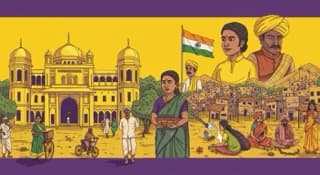
Growing up in Mumbai, Arjun navigated two distinct worlds daily—the bustling streets of his modest neighborhood and the elite, Westernized atmosphere of his prestigious international school. Within these contrasting environments, Arjun felt deeply torn, continually caught between embracing his cultural heritage and aspiring to Western standards subtly ingrained through a lingering colonial legacy.
Despite his evident talent and hard work, Arjun often grappled with feelings of inadequacy. School environments subtly reinforced that success and worthiness were tied to fluency in English, Western mannerisms, and economic privilege. At home, however, Arjun's family emphasized traditional values, cultural pride, and local traditions, creating an internal conflict he struggled to reconcile.
Arjun's Internal Struggle: Navigating Two Worlds
Arjun vividly recalls childhood moments where classmates mocked his accent, attire, or family traditions. Though these experiences appeared minor externally, they fostered lasting internalized beliefs about inferiority and cultural shame. His identity became fragmented—simultaneously proud and embarrassed, empowered yet limited.
As Arjun entered adulthood, these internalized feelings shaped his interactions and choices. In professional and social environments, he felt constant pressure to hide or minimize his cultural background, aspiring toward a perceived "elite" standard rooted in India's colonial past.
Recognizing the Emotional Patterns
Three patterns surfaced again and again:
- Internalized inferiority: Believing his cultural identity was inherently lesser or less acceptable.
- Constant comparison: Measuring self-worth based on proximity to Western ideals and socioeconomic standards.
- Identity suppression: Concealing or minimizing his cultural roots to seek acceptance in privileged spaces.
Naming these patterns became essential to Arjun's journey toward inner freedom and cultural empowerment.
The Leela Connection
Arjun's inner arc maps clearly onto the Leela game squares. His internal conflict aligns with the Illusion (Maya, Square 2)—mistakenly equating external validation with personal worth. This illusion repeatedly drew him down into Conceit (Mada, Square 7), the false pride and borrowed superiority bred by classist and colonial ideals.
Arjun's awakening emerged through the transformative arrow of Right Knowledge (Vidya, Square 45). By recognizing his inherent worth and reconnecting with authentic cultural pride, Arjun began a steady ascent toward clarity, self-respect, and genuine empowerment.
The Breakthrough: Reclaiming Cultural Identity
Arjun's breakthrough occurred during a cultural festival organized by his local community. Immersed in traditional music, art, and communal storytelling, Arjun experienced a sudden moment of clarity. Witnessing vibrant expressions of his cultural heritage, he realized his identity was not a limitation but a wellspring of strength, authenticity, and pride.
From that moment, Arjun consciously chose:
- Cultural reconnection: Actively learning and participating in cultural practices and community events.
- Expressive authenticity: Proudly embracing and sharing his cultural background openly in personal and professional settings.
- Educational activism: Promoting dialogues about colonial legacies, classism, and identity within educational institutions.
Practical Steps Toward Genuine Empowerment
Arjun's path highlights actionable strategies for overcoming internalized classism and colonial impacts:
- Cultural education: Actively learning and reclaiming cultural traditions, arts, and history.
- Mindful reflection: Regular meditation and journaling to recognize and overcome internalized biases and beliefs.
- Community engagement: Participating in community events, discussions, and workshops focused on cultural empowerment and awareness.
Reflective Questions for Personal Empowerment
- How have internalized societal beliefs influenced your identity and sense of self-worth?
- In what ways can embracing your cultural heritage empower your personal and spiritual growth?
- What practical actions can you take today to reclaim and celebrate your authentic identity?
Your Call to Cultural Empowerment
Like Arjun, your identity and cultural heritage are deep sources of strength, authenticity, and pride. By recognizing and dismantling internalized biases, you can reclaim your cultural identity and foster genuine self-empowerment.
Are you ready to embrace your authentic identity and cultural pride? Your transformative journey toward empowerment begins now.