
 Human Quest · Personal growthLog in
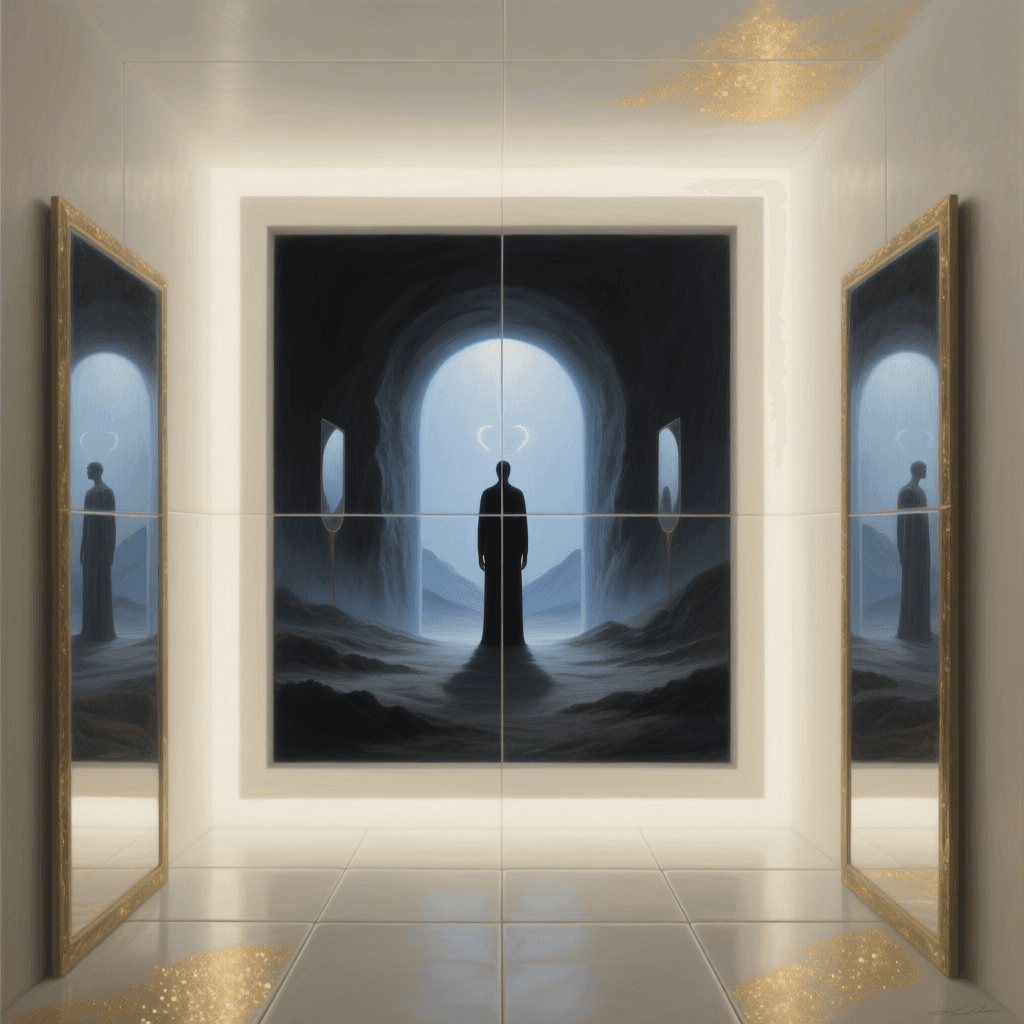
Anima and Animus: The Soul-Image on the Board
You meet someone across a crowded room and something in you lights up before a word is spoken. They seem lit from within, oddly familiar, almost fated. Weeks later, when they cancel a plan or say something careless, the light goes out just as fast, and you feel obscurely betrayed by a stranger who has done nothing but be ordinary. That swing — from luminous certainty to bruised disappointment — is one of the most reliable patterns in human love, and Jung had a specific name for the machinery behind it.
On the Jungian board in Leela Quest, that machinery sits at square 32, called Anima & Animus. It falls in the sixth row of the 72-square path, right in the stretch that deals with love, projection, and the inner life of relationship. It arrives after The Longing (28), The Beloved (29), and The Fall from Grace (30), and just after The Inner Other (31) — the moment the player first suspects that the captivating figure they keep chasing outside also lives within. Square 32 is where that suspicion is named.
What Jung actually meant
The anima and animus are what Jung called the soul-image: an inner figure that carries a person's sense of meaning, mood, and connection to the depths of the psyche. He described it as contrasexual — the anima as the inner feminine in a man, the animus as the inner masculine in a woman. In his framing, a man's anima governs the world of feeling, relatedness, and the unconscious, while a woman's animus governs word, conviction, and meaning. Each was, for him, a bridge between the conscious "I" and the vast unknown beneath it.
Here it matters to be careful, because Jung wrote in the early twentieth century and his account of masculine and feminine reads as dated now. The durable insight underneath the period language is simpler: each of us carries an image of the other — the qualities we did not consciously develop, the side left in shadow — and that inner other exerts an outsized pull on who we desire and how we love. Many contemporary Jungian analysts treat the soul-image as available to anyone regardless of gender or orientation; the "contrasexual" figure is really the unlived, less-conscious half of you, whatever shape it happens to take. Read that way, anima and animus stop being a claim about men and women and become a claim about wholeness — that no one is only what they have made conscious of themselves.
Why the soul-image runs your love life
The reason square 32 sits among the love squares is that the soul-image does its most dramatic work through projection. When the inner figure stays unconscious, you do not experience it as yours. You experience it out there, hanging on a real person. As the square's own text on the board puts it, unconscious, this figure "runs your love life from behind the curtain, choosing your fascinations, dictating your moods, casting itself onto unsuspecting partners."
That is what falling in love often is, in this reading: you meet someone whose surface fits the inner image closely enough, and your own depths flood outward and light them up. The radiance is real, but a large part of it is yours, reflected back off a living screen. This is why the collapse in square 30 hurts so specifically. Nothing has been taken from you when the beloved turns out human — the projection has simply peeled off and slid back home, leaving the actual person, smaller and separate, where the god used to stand.
The same figure shows up when it is not being adored. In the squares just after 32 — Moods and Spells (33) and The Seductive Image (34) — the board tracks how the soul-image seizes you in subtler ways: a mood that descends for no reason and colors everything, a fixed opinion you would defend to the death, a fascination that bypasses your judgment entirely. Jung read these states as the signature of the anima or animus operating unseen, briefly taking the wheel while the conscious self rides along convinced it is being perfectly reasonable.
A few tells that an inner figure, rather than the present moment, is running the show:
- The intensity is out of proportion — a person you barely know feels like destiny, or an offhand remark leaves you sulking for a day.
- The certainty arrives whole and pre-formed, resisting any argument, as if it were reasoning through you rather than being reasoned by you.
- The other person keeps getting recast: first flawless, then a disappointment, with little room for them to be merely ordinary.
Making the figure conscious
The board does not tell you to kill the anima or animus, and neither did Jung. The task at square 32 is relationship, not exorcism. Made conscious, the same figure that gripped you becomes, in the square's words, "a wise inner companion and a guide to the soul's depths." The shift is from being possessed by the soul-image to being related to it.
In practice that begins with a small, unglamorous move: catching the projection in the act. The next time a fascination feels fated or a certainty feels absolute, pause and ask what the intensity is really about. Not is this person good or bad but what in me is lighting them up like this? Jung's own method here was active imagination — sitting with the inner figure, letting it take a form and a voice, asking it what it wants and what it knows that you do not. You needn't formalize it that far. Even a journaling habit that separates "who this person actually is" from "what I've draped over them" starts to drain the charge from the projection and hand back the energy bound up in it.
This work does not make you self-sufficient in a cold way. The opposite, really. Square 36, The Soul Reclaimed, describes what waits a little further down the row: by carrying the soul-image yourself rather than outsourcing it to a partner, you stop arriving at love starving and projecting, and become more capable of real intimacy — able to meet the person instead of the fantasy you hung on them.
Where it sits on the whole path
Anima and animus are not a detour on the Jungian board; they are the middle of the arc. The path runs from the persona — the social mask you forgot you're wearing — down through the confrontation with the shadow, and only then into the soul-image and the deeper figures of the psyche. Each stage reclaims something you had cast outward: first the disowned faults you projected onto enemies, then the inner other you projected onto lovers. It is all one movement, the slow gathering of a scattered self back toward its center. That center is square 68, The Self, where the conscious "I" and the unconscious finally unite — the goal the whole 72-square journey of individuation is walking toward.
That structure — a numbered path, obstacles that pull you down, insights that carry you up, and a single square at the end that means wholeness — is the inheritance Leela handed down. The Jungian board borrows the ancient Indian game's architecture and repopulates it with the geography of the psyche. Where the classical Vedic board climbs toward Cosmic Consciousness, this one climbs toward the integrated Self. The soul-image is one of the great teachers along the way, and one of the great tricksters, depending entirely on whether you know it is there.
Sit with square 32 on the board itself, read its neighbors, and notice which of them describes where you actually are. Explore the Jungian board, or take a roll and play a round to see which square the dice — chance meeting your own readiness — decide to hand you next.
Keep reading
Which Jungian Archetype Are You? A Guided Self-Assessment
A guided, honest self-assessment to notice which Jungian archetypes are most alive in you right now — Persona, Shadow, soul-image, or the Self.
Meeting the Shadow: The Board's Most Feared Square
On the Jungian board, square 23 is the Shadow — the disowned self Jung said we must face. What lives there, why we fear it, and what integrating it means.
The Persona: The Mask You Forgot You're Wearing
The persona in Jung's work is the social mask we all wear — necessary, useful, and quietly dangerous once we mistake it for the whole self.

What Is Shadow Work? A Beginner’s Guide (with 30 Prompts)
Shadow work means facing the parts of yourself you hid to belong. A plain-English beginner’s guide to the practice, its risks, and 30 prompts to start.
The Jungian Path: Individuation as a Game
Walk individuation as a board you can play — from Persona and Shadow through Anima and Animus to the Self at square 68, mapped station by station.
Leela: The Ancient Game of Self-Knowledge (A Complete Guide)
The Leela game is the ancient spiritual ancestor of Snakes and Ladders: 72 squares, eight chakra rows, and a die that turns play into self-reflection.