
 Human Quest · Personal growthLog in
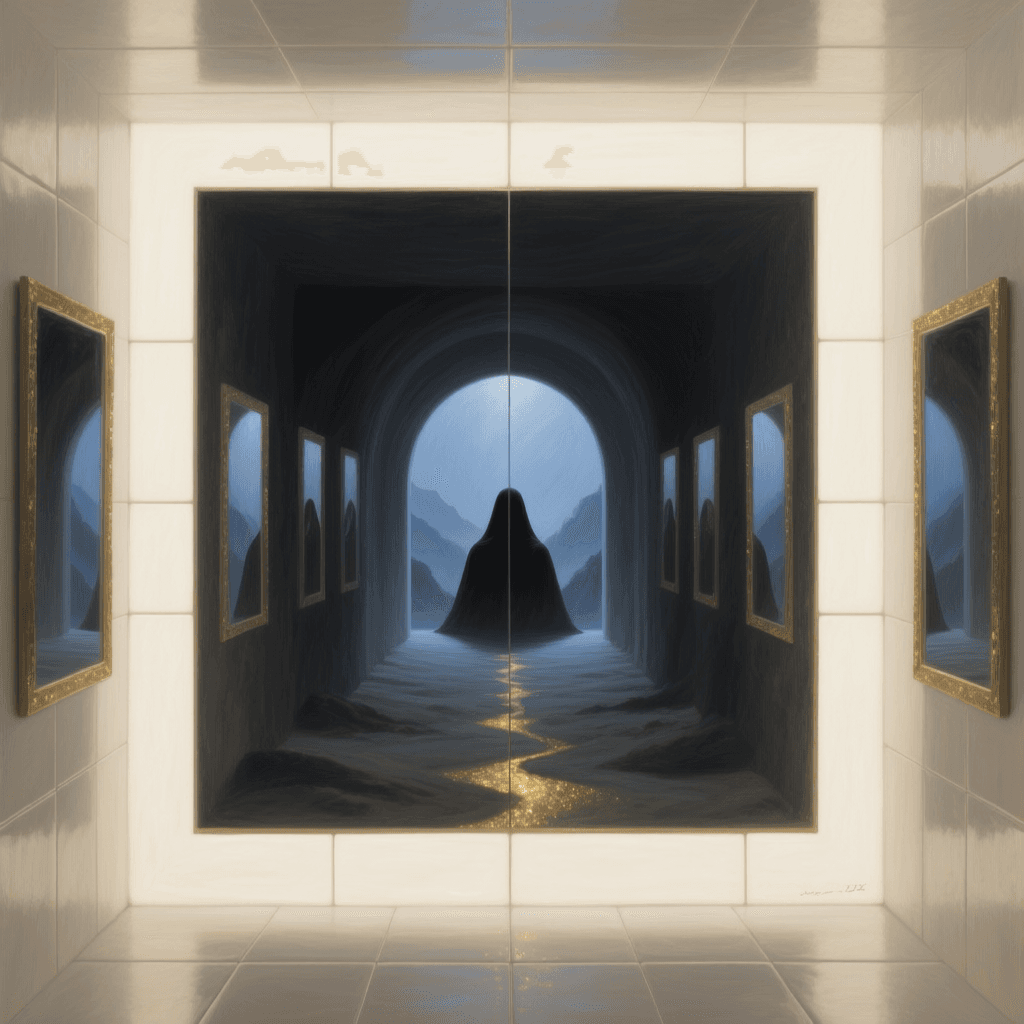
Meeting the Shadow: The Board's Most Feared Square
Players stall on square 23. Not because the rules trap them there, but because of what the square asks. On the Jungian board — the 72-square path of individuation that runs from a newborn's first breath to the integrated Self at square 68 — this is the square called The Shadow. Its one-line summary on the board doesn't soften anything: "You face the shadow directly, the disowned and inferior self you have carried in darkness. To meet it without flinching is among the bravest acts there is."
Most of the squares before it are warm-ups for this one. Square 19 is The Stranger Within, the first hint that something in you is not on your side. Square 20 is The Enemy's Face — the moment you notice how much of your fear lives out in the world, in the people you can't stand. Square 21, The Projection, spells out the mechanism: much of what you see in others, you put there. Square 22, The Inferior Self, brings you to your own clumsiness and shame. And then 23. The board has been walking you toward the shadow for five squares, the way you spend years circling a truth before you can say it plainly.
What actually lives in the shadow
The shadow Jung wrote about is not evil, and it is not the unconscious as a whole. It is more specific and more personal than that. It's the pile of everything you decided, somewhere back in childhood, that you could not be and still be loved. The anger that got you sent to your room. The neediness that embarrassed the adults. The greed, the wildness, the loud selfish appetite — all of it exiled to keep your bright, acceptable self-image intact. The board puts it bluntly: the shadow is "the part of you that you do not want to be."
Here's the catch that makes it so hard to hold. The exile isn't clean. When you cut off the parts of yourself that felt dangerous, you cut off their energy too. The square's own text names what goes down into the dark alongside the cruelty and the greed: "spontaneity, passion, and raw aliveness, the very energies you will need to live fully." This is the piece people miss. Your shadow is not just a container for what's ugly in you. It's also where your unlived vitality went. The two squares after 23 make this concrete — square 24, Owning the Dark, and square 25, The Golden Shadow, where you find that you buried some of your gifts down there too, your brightness hidden away as "too much."
So the shadow is not a monster in the basement. It's the whole disowned half of you, dark and gold both, waiting where you left it.
Why we fear it
The fear is honest, and it's worth respecting rather than talking yourself out of. Facing the shadow is genuinely humbling. It means admitting that the traits you condemn most loudly in other people — the manipulator, the show-off, the coward — are traits you carry too. It's much more comfortable to keep them out there, hung on someone else. As long as your worst qualities belong to your ex, your boss, or the other political party, you never have to own them.
There's also a real reason the fear isn't neurotic. Some of what the shadow holds is actually dark. This isn't the reassuring self-help promise that you're secretly wonderful underneath. Jung was clear that the shadow contains material that is genuinely petty, cruel, and cowardly. Meeting it honestly means meeting that, not editing it into something flattering. He called this encounter the apprentice-piece of inner work — the first real test of whether you can become whole. Not the master-work. The apprentice-piece. The thing you have to get through before the deeper work is even possible.
The board treats it as a threshold for exactly this reason. You cannot reason the shadow away or wish it into the light. It has to be faced, felt, and claimed as your own.
Integration is not elimination
Here is the single most misunderstood thing about shadow work, and the board gets it right where a lot of popular writing gets it wrong. The goal is not to defeat the shadow, purge it, or finally become a person who has no dark side. That project fails every time, and it usually makes the shadow worse — the harder you press it down, the more it leaks out sideways, in your moods, your projections, the things you do that you can't explain afterward.
The goal is integration. To own your shadow, as the square puts it, "is not to act it out but to integrate it." Those are two different acts, and the whole difference lives in the gap between them. Acting it out is letting the anger drive — snapping, blaming, indulging the appetite and calling it honesty. Integrating it is something quieter and much harder: holding your own capacity for envy or rage or cowardice, feeling it fully as yours, and not being run by it. You let it be true. And once it's allowed to be true, it loses the power to ambush you.
A short way to feel the difference in your own life:
- Notice a strong judgment — someone who genuinely irritates you, more than the situation warrants.
- Ask what specific quality set you off: their neediness, their arrogance, their laziness.
- Then ask the uncomfortable question the board's Projection square points to: where does that quality live in me? Not "am I exactly like them" — but where, in some form, do I carry the same thing and refuse to see it?
That single move — my reaction is about me — is what the board's next square, Owning the Dark, calls draining the charge from your projections. Do it enough times and something strange happens: people stop being mirrors of your denial and start being themselves. Your relationships clear. You are no longer at war with the world over what was always inside you.
Why the whole board bends toward this square
The Jungian path doesn't treat the shadow as one obstacle among many. It treats it as the gate. The goal square, 68, is The Self — Jung's symbol for a psyche where the conscious "I" and the buried unconscious have finally come into one whole. You cannot reach a whole self while half of you is disowned. That's the logic of the board and the logic of the work: nothing cast out can be included later. Everything you refuse here you'll have to come back for.
Which is why square 23 is the most feared square, and also the most important one. The players who stall there aren't weak. They've simply arrived at the real thing.
If you want to understand the framework this square lives inside, start with The Jungian Path: Individuation as a Game, then read the practical companion, What Is Shadow Work? A Beginner's Guide — it includes 30 prompts you can use with the questions above. It also helps to see where the shadow begins: with The Persona, the mask whose making creates the shadow in the first place.
When you're ready to stop reading about it and land on the square yourself, play the Jungian board and see where the dice put you.
Keep reading
Which Jungian Archetype Are You? A Guided Self-Assessment
A guided, honest self-assessment to notice which Jungian archetypes are most alive in you right now — Persona, Shadow, soul-image, or the Self.
Anima and Animus: The Soul-Image on the Board
Anima and animus: Jung's contrasexual soul-image, square 32 on the Jungian board — how the inner other shapes who you fall for and why we project.
The Persona: The Mask You Forgot You're Wearing
The persona in Jung's work is the social mask we all wear — necessary, useful, and quietly dangerous once we mistake it for the whole self.
What Is Shadow Work? A Beginner’s Guide (with 30 Prompts)
Shadow work means facing the parts of yourself you hid to belong. A plain-English beginner’s guide to the practice, its risks, and 30 prompts to start.
The Jungian Path: Individuation as a Game
Walk individuation as a board you can play — from Persona and Shadow through Anima and Animus to the Self at square 68, mapped station by station.
Leela: The Ancient Game of Self-Knowledge (A Complete Guide)
The Leela game is the ancient spiritual ancestor of Snakes and Ladders: 72 squares, eight chakra rows, and a die that turns play into self-reflection.